


The Great Shift: My Journey from Shadows to Color
When I first picked up a camera and hit the streets, my choice was almost instinctive: black and white. To be honest, as a new photographer, I was convinced that monochrome was the only way for a photo to look truly "artistic." I felt that by stripping away the color, I was automatically adding depth, drama, and a sense of seriousness to my frames.
In the Shadow of the Masters
This attachment wasn't accidental. My first steps in studying street photography were a deep dive into the work of the "giants." Studying Henri Cartier-Bresson, Robert Frank, or Fan Ho made it easy to equate street photography exclusively with shades of gray. In my eyes, these pioneers weren't just taking photos; they were creating timeless poetry. Attempting to emulate them, I closed my eyes to the city's colors, viewing them as mere "noise" that distracted from the essence of the moment.
When Recognition Became a New Beginning
Validation for this path came in 2016, right here in Australia—the country I have called home for the last 25 years. Being named the Best Street Photographer in Black and White was a moment of great honor. Living and shooting here, under the unique, harsh, and often unforgiving Australian light, monochrome was my natural way of taming high contrasts and emphasizing form.
However, that award worked in a curious way. Instead of making me complacent, it sparked a change. I felt I had achieved what I wanted in black and white, and I felt the need to confront something that had previously intimidated me: color.
Decoding the Palette of Reality
To make the leap, I had to change my "library." I began studying the masters of color—photographers like Alex Webb, Joel Meyerowitz, and Saul Leiter.
There, I saw something profound: color wasn't just a decorative element. It was a tool that made an image more intense, more vibrant, and ultimately, much closer to real life. I realized that life isn't black and white; life has nuances that carry emotion and information that gray simply cannot convey.
The Precision of the Frame
This transition forced me to become much more disciplined with my composition. In black and white, you can often "get away" with a mediocre composition if the lighting is dramatic enough. In color, however, every element in the frame carries weight. A "wrong" color in a corner can pull the eye away from your subject. I had to learn to balance my frames with surgical precision, controlling not just lines and shapes, but the intensity of the hues.
Color is the New Black
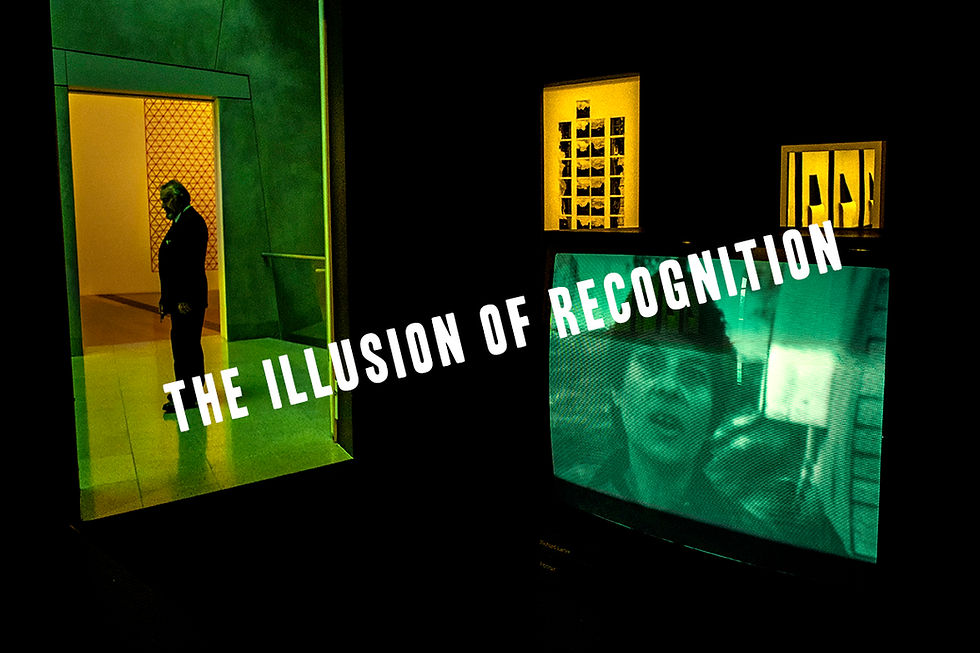
Since 2016, I have been shooting almost exclusively in color. And when I say exclusively, I mean it. I’ve reached a point where I use black and white only as "first aid." Let’s be real: I now convert a photo to monochrome only when it’s "blown out"—not necessarily by light, but when the colors have overwhelmed the composition, becoming so chaotic that I have to "mute" them to restore order.
I used to remove color to make a photo look like "art." Now, I only remove it when the color has won the battle against my composition!
Photography as a Mirror of Maturity
As we grow older, we change, and this evolution inevitably reflects in our art. We mature not just as individuals, but as artists. If my beginning was defined by monochrome abstraction and my middle ground by the challenge of bold color, today I feel the need to push even further.
Lately, I’ve been trying to incorporate more layers and a sense of complexity into my frames, seeking to capture the beautiful chaos of life. Yet, there’s a restless part of me that wants to experiment with new ways of shooting to express what I’m feeling in this current chapter.
After all, photography isn’t just about depiction; it’s about pure emotion. And that emotion always finds its way to the surface—whether there are people in the frame or not, and whether the image is in color or monochrome.



Comments